Relocating from Chicago to Sarasota: What Serious Buyers Find Here
Chicago has sent luxury buyers to Sarasota for longer than almost any other American city. The connection traces back to John Ringling's era, when wealthy Midwesterners began building winter estates here in the 1920s and 1930s, drawn by the Gulf Coast climate and by Sarasota's emerging identity as an arts destination. That pipeline has never closed, and in recent years it has accelerated sharply.
IRS migration data consistently places Illinois among the top five states sending households to Sarasota County. The post-2020 acceleration has been driven by the same forces pushing high-net-worth households out of Illinois more broadly: a state income tax that applies to all income regardless of amount, Cook County property taxes that rank among the highest effective rates in the country, and a state fiscal picture that has created genuine uncertainty about the trajectory of both.
The Financial Case for Illinois Residents
Illinois has a flat state income tax rate of 4.95% on all income. There is no graduated structure, no exemption at high earnings — everyone pays 4.95% from the first dollar. Combined with the federal rate, Illinois residents at the top of the income scale pay approximately 42% on ordinary income. Florida residents pay the federal rate only.
For a household earning $1.5M annually, that is roughly $74,000 per year in Illinois state income tax that disappears upon establishing Florida domicile. Over ten years, invested rather than paid to Springfield, that differential is approximately $1.1M at a conservative assumed return. It is not a trivial number.
Cook County property taxes deserve particular attention. Effective rates of 2.0% to 2.5% of assessed value are common across Chicago's North Shore suburbs — Winnetka, Kenilworth, Lake Forest, Glencoe — and comparable rates apply in the city's most desirable neighborhoods. Sarasota County's effective rate is approximately 0.89%. On a comparable $5M property, that is a difference of $55,000 to $80,000 per year in property taxes. Illinois property owners who own significant real estate understand this intuitively. The numbers are not subtle.
Illinois imposes a state estate tax on estates over $4M at rates reaching 16%. Florida has no state estate tax. For families with accumulated wealth above $10M, this distinction has meaningful generational implications — particularly given the federal estate tax exemption rollback scheduled for 2026, which reduces the federal exemption and pushes more wealth into state tax exposure for states that have one.
The Cultural Alignment
This is where the Chicago-to-Sarasota connection has always been strongest. Chicago buyers arrive with cultural expectations that most Florida markets cannot meet. They are accustomed to cities that take the arts seriously at an institutional level — the Chicago Symphony Orchestra, the Lyric Opera, the Art Institute, the Chicago theater scene. These expectations are not easily satisfied by the typical Florida luxury market's cultural offering.
Sarasota is the exception. The Sarasota Orchestra performs a full concert season. The Sarasota Ballet, under the artistic leadership it has maintained for years, is one of the leading regional companies in the country. The Ringling Museum of Art holds one of the finest collections of Baroque masters in the Western Hemisphere and sits on a 66-acre campus that is itself a cultural monument. The Asolo Repertory Theatre produces work at a level that would be credible in any American theater city. Selby Botanical Gardens is internationally recognized for its orchid collection and research mission.
None of these institutions match the Chicago Symphony or the Art Institute in scale. But they are serious institutions in the way that Chicago buyers understand seriousness — professionally run, artistically ambitious, engaged with their subject matter at the highest level available. Chicago buyers reliably recognize this and it consistently matters to their relocation decision.
The Golf Connection
The western suburb private club culture — Medinah, Shoreacres, Onwentsia, Exmoor, Chicago Golf Club — produces some of the most serious private golfers in the country. These are buyers who understand course quality, club culture, and the value of what good private golf offers. They do not arrive in Sarasota expecting to be impressed. They frequently are.
The Founders Club's Robert Trent Jones Jr. design is a serious golf course on a 700-acre property with 262 homes and no CDD. The Concession, a Jack Nicklaus design developed in partnership with Tony Jacklin, has hosted PGA Tour events and is considered one of the most challenging and beautiful courses in Florida. Laurel Oak has both a Gary Player design and a Rees Jones design on the same property, with a reciprocal arrangement with Bird Key Yacht Club that bridges the golf and boating worlds. The Oaks Club's two courses include Oaks Bayside, where membership also includes access to a private dock on Little Sarasota Bay.
Chicago golfers who visit these clubs typically find the quality meets or exceeds what they expected. The combination of serious golf and Gulf Coast living is a genuinely powerful draw for this buyer profile.
The Neighborhoods Chicago Buyers Choose
Chicago buyers with strong North Shore backgrounds — Lake Forest, Winnetka, Kenilworth — tend to gravitate toward Sarasota's West of Trail neighborhoods. Cherokee Park, Oyster Bay Estates, and the streets around Southside Village carry a character that North Shore buyers recognize: mature trees, generous lots, established landscaping, homes that have been maintained and improved over decades by owners who care about the neighborhood. These are not cookie-cutter developments. They have the kind of permanence and character that Chicago's most established neighborhoods have, transplanted to a Gulf Coast context.
Buyers from Lincoln Park, the Gold Coast, or Chicago's dense lakefront neighborhoods often find Bird Key and Golden Gate Point more immediately appealing — closer to downtown, more walkable, the water more integrated into daily life.
Buyers from the outer suburbs or from a golf-centric lifestyle tend to look seriously at the Founders Club, Laurel Oak, or The Oaks, where the club infrastructure is the organizing principle of the community.
What Chicago Buyers Are Typically Surprised By
The most common surprise is Sarasota's scale — specifically, how small it is relative to what it offers. The city is genuinely compact. Everything — the beach, the restaurants, the airport, the clubs, the arts institutions — is within twenty to thirty minutes of everything else. After the distances of Chicago's suburban sprawl, this compression feels unusual and then quickly becomes something buyers don't want to give up.
The second surprise is the summer. Chicago buyers who have only visited Sarasota in January or March need to spend a week here in July before they commit. July and August are genuinely hot and humid. It is not uninhabitable — plenty of full-time residents embrace summer in Sarasota, and the beaches and water are beautiful year-round — but it is a real climate, not a perpetual spring, and buyers deserve to know what they are buying into twelve months a year.
The third surprise, a positive one, is how quickly the social infrastructure builds. Chicago transplants in Sarasota are not rare — they are a significant portion of the community. There is an informal but real Chicago network in the city, concentrated in the clubs and the cultural institutions. Buyers who engage from day one tend to find their social footing faster than they expected.
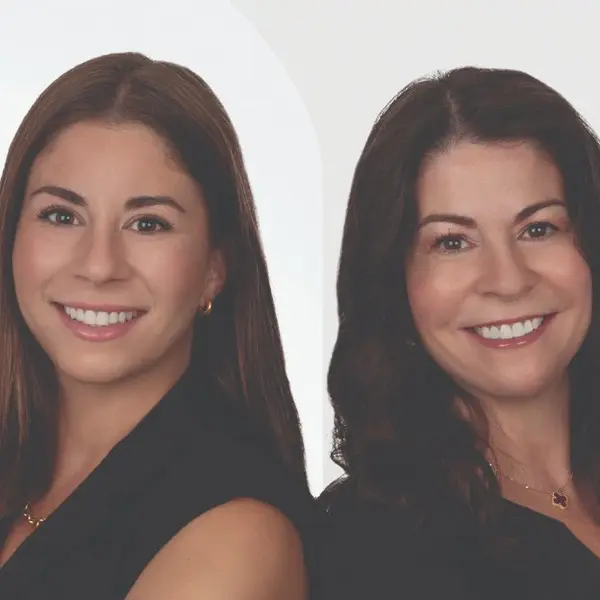
Victoria Stultz & Andrea Stultz Wood | The Stultz Wood Group · Engel & Völkers Sarasota
Categories
Recent Posts